Some dishes are meals.
Others are events.
Kaburga Dolması belongs firmly to the second category.
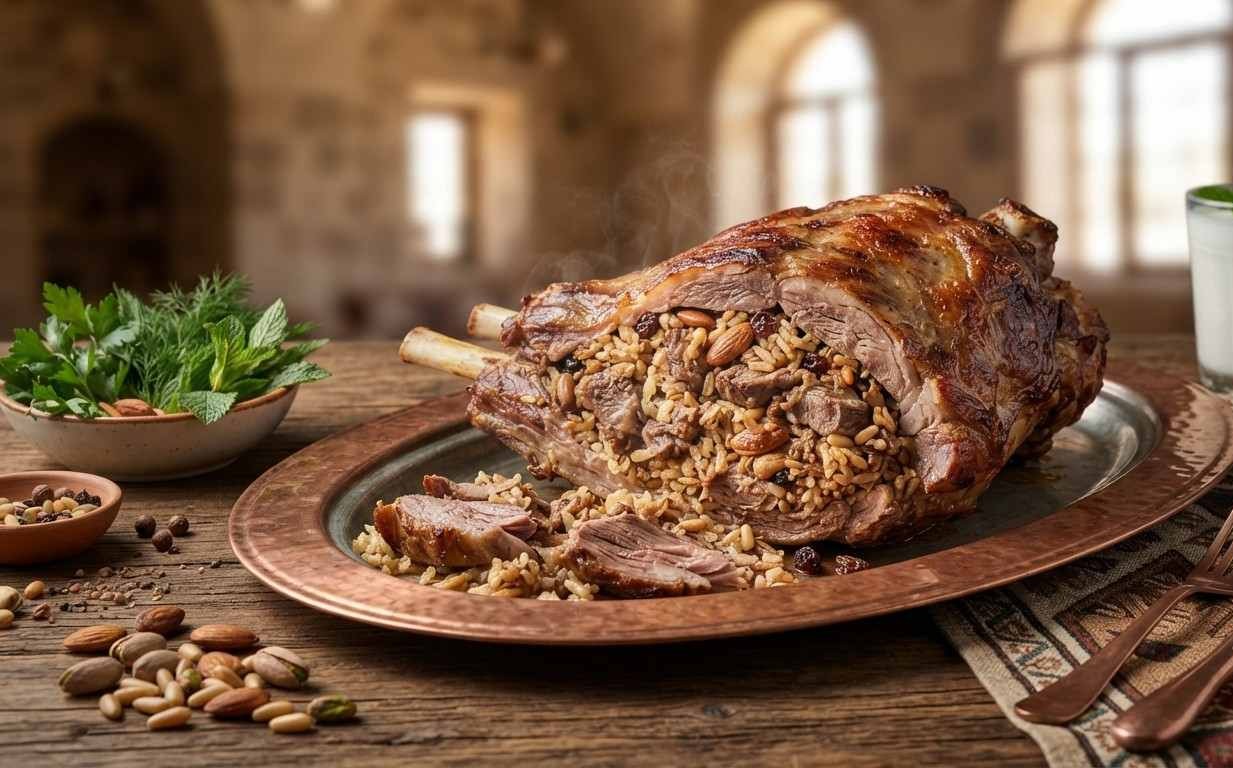
A spectacular specialty associated with Diyarbakır, this traditional dish takes a whole section of lamb ribs and transforms it into an elaborate centerpiece by filling it with a seasoned mixture of rice, lamb, almonds, herbs, and spices. The stuffed ribs are then cooked slowly until the meat becomes exceptionally tender before being finished until the exterior develops a rich, browned appearance.
It is not the kind of food designed for a rushed weekday lunch.
Kaburga dolması is food for gatherings, celebrations, important guests, and occasions when generosity matters. Its preparation is labor-intensive, requiring the ribs to be carefully opened, filled, secured, cooked slowly, and finished before being brought to the table.
And that is exactly what makes it so fascinating.
This is not simply stuffed meat.
It is a dish that tells a story about Diyarbakır's culinary heritage, hospitality, patience, and love of richly flavored food.
What Is Kaburga Dolması?
The name itself provides a useful clue.
In Turkish, kaburga means ribs, while dolması refers to something that has been stuffed.
Put the two together and you essentially get:
Stuffed ribs.
But the actual dish is considerably more elaborate than that simple translation suggests.
Diyarbakır Kaburga Dolması is prepared using lamb ribs, with the cavity between the meat and bones carefully opened to create space for the filling. The traditional filling includes rice, lamb meat, almonds, butter, tomato or pepper paste, herbs, and spices, although exact ingredients can vary by recipe and household.
The prepared ribs are then closed and cooked slowly.
Traditional preparations can involve steaming for several hours before the ribs are transferred to an oven and browned with a seasoned paste. An official Turkish culinary recipe lists approximately three hours of steaming followed by around 20 minutes in a hot oven.
The finished dish is brought to the table hot.
And when it is opened and sliced, the contrast is spectacular: tender lamb surrounding fragrant, nutty rice.
A Dish Closely Connected to Diyarbakır
Diyarbakır has one of the most distinctive culinary traditions in southeastern Türkiye.
Its cuisine is known for robust meat dishes, rice and bulgur preparations, spices, butter, herbs, and flavors that can be simultaneously savory, spicy, aromatic, and rich.
Kaburga dolması fits naturally into this culinary landscape.
The dish has become so closely associated with Diyarbakır that Diyarbakır Kaburga Dolması was registered as a geographical indication in 2021, with the Diyarbakır Chamber of Commerce and Industry as the applicant.
That official recognition reflects something locals have understood for generations:
Kaburga dolması is not just another lamb recipe.
It is part of the city's culinary identity.
Why Is Kaburga Dolması So Special?
At first glance, the ingredient list might not seem extraordinary.
Lamb.
Rice.
Almonds.
Butter.
Herbs.
Spices.
Paste.
These are all familiar ingredients.
The magic comes from how they are brought together.
The lamb ribs provide fat, flavor, and richness.
The rice absorbs the juices released during cooking.
The almonds contribute texture and a subtle nuttiness.
Butter adds richness.
Herbs and spices provide aromatic depth.
And the final roasting creates a browned exterior that contrasts with the tender meat and soft rice inside.
It is an example of a traditional cooking technique turning relatively simple ingredients into something much greater than the sum of its parts.
The Art of Preparing the Lamb
The preparation begins with the ribs.
This is where kaburga dolması immediately becomes different from an ordinary stuffed dish.
Rather than simply placing filling between pieces of meat, the cook carefully creates a pocket within the lamb rib section.
The traditional Diyarbakır method involves separating the meat from the bone to create a cavity that can hold the filling. This requires a certain amount of skill because the pocket needs to be large enough for the stuffing while the meat must remain intact.
It is a task that rewards an experienced hand.
Too much force could damage the meat.
Too little space means the filling will not fit properly.
The ribs have to remain strong enough to contain the rice while cooking.
That craftsmanship is part of the dish.
The Rice Filling
Rice is at the heart of kaburga dolması.
But this is not ordinary plain rice.
The filling is seasoned and enriched before it enters the lamb.
Traditional versions may include almonds, butter, parsley, basil or reyhan, black pepper, red pepper, and other seasonings. Some versions also incorporate lamb meat directly into the filling.
The rice is partially prepared before being placed inside the ribs.
This is important because the filling continues cooking during the long cooking process.
As the lamb slowly cooks, juices and rendered fat penetrate the rice.
The result is deeply flavored rice that tastes distinctly different from rice cooked separately in a pot.
It effectively becomes part of the lamb.
Why Almonds Matter
One of the most distinctive ingredients in Diyarbakır-style kaburga dolması is almond.
Almonds provide something the other ingredients cannot: texture.
The filling is soft and rich.
The lamb is tender.
Then you encounter the gentle crunch of almonds.
That contrast makes each bite more interesting.
Almonds also bring a subtle sweetness and nuttiness that works beautifully with lamb and warm spices.
It is a small detail, but it helps give kaburga dolması its distinctive character.
Herbs and Spices
Kaburga dolması is not simply about meat and rice.
Seasoning is essential.
Depending on the recipe, the filling can include ingredients such as:
- Black pepper
- Red pepper
- Allspice
- Basil or reyhan
- Parsley
- Salt
- Tomato or pepper paste
The official Diyarbakır recipe published through Türkiye's Culture Portal includes red pepper, reyhan or basil, parsley, black pepper, and other seasonings.
These ingredients give the rice a complex aromatic quality.
The result is flavorful without relying on one dominant spice.
Closing the Ribs
Once the filling has been prepared, it is placed inside the rib cavity.
Then comes another fascinating part of the process:
the ribs are closed.
Traditional descriptions explain that the opening is secured using strong thread so the filling remains inside during cooking.
This may sound simple, but it is an important step.
The rice needs room to expand.
The meat needs to cook evenly.
The filling needs to remain contained.
And the entire piece needs to survive hours of cooking.
The result is almost like a culinary package: a large piece of lamb enclosing its own seasoned rice filling.
The Slow-Cooking Process
Patience is perhaps the most important ingredient in kaburga dolması.
This is not fast food.
Traditional methods involve prolonged steaming or slow cooking.
One official recipe describes placing the stuffed ribs in a covered metal strainer over a pot of water, allowing steam to cook the meat for approximately three hours.
Other documented preparations describe cooking the stuffed ribs for even longer at low heat.
The objective is the same:
tenderize the lamb while allowing the filling to absorb its flavors.
Slow cooking gives connective tissues time to break down.
Fat gradually renders.
The rice becomes infused with meat juices.
And the entire dish becomes increasingly cohesive.
The Final Roasting
After the long cooking stage comes the transformation that gives kaburga dolması its dramatic appearance.
The cooked ribs are transferred to an oven tray and coated with a mixture that can include pepper or tomato paste and spices.
They are then roasted until the exterior becomes browned and richly colored. The traditional Culture Portal recipe specifies a hot oven for approximately 20 minutes at around 190–200°C.
This final step creates a contrast.
The inside is soft and juicy.
The outside is browned and intensely savory.
The result is visually impressive enough to become the centerpiece of a large table.
The Moment It Reaches the Table
There is something theatrical about kaburga dolması.
Imagine a large golden-brown piece of lamb arriving at the center of the table.
Everyone knows there is something hidden inside.
The ribs are opened.
The aroma rises.
The rice is revealed.
Almonds are scattered throughout the filling.
The meat separates easily after its long cooking process.
Suddenly, the dish becomes more than dinner.
It becomes a shared experience.
This is one reason elaborate traditional dishes have such a strong place in food cultures.
The preparation may happen in the kitchen, but the final reveal happens around the table.
A Dish for Special Occasions
Kaburga dolması is associated with meals where food carries social meaning.
Because it requires considerable preparation and a substantial amount of lamb, it is not simply an everyday dish.
It is especially suited to:
- Weddings
- Religious celebrations
- Family gatherings
- Important guests
- Festive meals
- Other major occasions
The Diyarbakır Governor's Office describes it as one of the city's special dishes and notes its presence at special occasions and invitation tables.
That makes perfect sense.
A dish this elaborate is designed to communicate something.
You are important enough for us to make this.
Kaburga Dolması and Hospitality
Food has always been closely connected to hospitality across southeastern Anatolia.
A guest is not simply given something to eat.
They are often given the best food available.
Kaburga dolması is perfectly suited to this tradition.
It takes time.
It takes skill.
It uses generous quantities of meat, rice, butter, and nuts.
And it creates a dramatic centerpiece that can feed several people.
Preparing such a dish for guests is therefore a form of generosity.
The food itself communicates welcome.
More Than a Recipe
One of the easiest mistakes when discussing traditional food is to focus exclusively on ingredients.
A recipe tells you what is in the dish.
Culture tells you why the dish matters.
Kaburga dolması matters because it connects cooking with celebration.
It connects meat with generosity.
It connects skilled preparation with family traditions.
And it connects modern diners with culinary practices that have been passed through generations.
That is why traditional dishes deserve to be understood beyond their ingredient lists.
The Flavor of Kaburga Dolması
So what does it actually taste like?
The first impression is rich and savory.
The lamb provides deep meatiness.
The butter contributes richness.
The rice absorbs the lamb's juices.
Almonds introduce a subtle nuttiness.
Black pepper and other spices provide warmth.
Herbs add freshness.
The roasted exterior contributes a deeper, slightly caramelized flavor.
But the most interesting characteristic is the relationship between the lamb and rice.
They are cooked together.
The rice is not merely a side dish.
It becomes part of the lamb's flavor.
And the lamb becomes part of the rice.
Texture Is Just as Important
Great dishes are not only about flavor.
Texture plays a major role too.
Kaburga dolması provides several textures in a single serving.
The exterior can be browned and slightly crisp.
The lamb underneath is tender.
The rice is soft and aromatic.
The almonds provide occasional crunch.
Herbs provide tiny fresh accents.
That contrast makes the dish satisfying even before you consider the flavors.
Kaburga Dolması Compared With Other Dolma
The word dolma appears throughout Turkish cuisine.
You may already know dishes such as stuffed peppers, stuffed grape leaves, or other vegetables filled with rice and meat.
Kaburga dolması follows the same broad culinary concept:
something is being filled.
But the scale is completely different.
Instead of stuffing a vegetable or leaf, the cook creates a cavity inside a substantial piece of lamb.
It is essentially a grand meat-centered interpretation of the broader dolma tradition.
This makes kaburga dolması one of the more dramatic examples of stuffing techniques in Turkish cuisine.
Kaburga Dolması Is Not Just "Stuffed Ribs"
The English translation is useful, but it does not capture the full identity of the dish.
"Stuffed ribs" could describe countless dishes around the world.
Kaburga dolması has a particular culinary context.
The lamb.
The rice.
The almonds.
The herbs.
The regional spices.
The slow cooking.
The final roasting.
The communal presentation.
And most importantly, the connection to Diyarbakır.
All of those elements matter.
The Dish Has Regional Variations
As with many traditional dishes, there is not necessarily one identical recipe used by every family or restaurant.
Different preparations may use slightly different ingredients, proportions, spices, or cooking techniques.
Some versions emphasize lamb and rice.
Others include additional nuts or dried fruits.
Some preparations feature stronger spice profiles.
Others focus more heavily on herbs and butter.
There are also related stuffed-lamb preparations in other parts of Türkiye.
This variation should not be viewed as a problem.
It is evidence that the dish is alive.
Traditional food changes as it moves between kitchens.
The Broader Tradition of Stuffed Lamb
Kaburga dolması belongs to a wider tradition of stuffed meat dishes found across the Middle East and eastern Mediterranean.
The basic idea is remarkably universal:
Take a valuable cut of meat.
Fill it with something flavorful.
Cook it slowly.
Serve it during important gatherings.
The exact ingredients and techniques change from place to place.
Diyarbakır's version stands out because of its particular combination of lamb, rice, almonds, herbs, spices, and cooking methods.
Research on traditional Turkish stuffed lamb ribs also notes that similar dishes are known in multiple regions of Türkiye and are often associated with festive meals because of the skill and effort involved.
Why the Cooking Technique Matters
It would be possible to simplify the dish.
You could cook lamb separately.
You could make rice separately.
You could add almonds afterward.
But that would miss the point.
The traditional method creates a relationship between the components.
The lamb cooks around the filling.
The rice absorbs the meat's juices.
The steam keeps the interior moist.
The final oven stage develops color and flavor on the outside.
The technique is therefore not simply an old-fashioned method.
It is responsible for much of the dish's character.
A Labor of Patience
Modern cooking often emphasizes speed.
Dinner in 20 minutes.
One-pot meals.
Quick snacks.
Instant preparation.
Kaburga dolması belongs to another philosophy.
It says:
Some foods are worth waiting for.
The preparation may begin hours before anyone sits down to eat.
The ribs need to be carefully prepared.
The filling needs to be made.
The meat needs to be stuffed and secured.
The dish needs to cook slowly.
Then it needs to be finished in the oven.
Only after all of that does it arrive at the table.
That time is part of the experience.
Why Diyarbakır's Cuisine Is So Memorable
Diyarbakır's culinary identity is strongly associated with dishes that are bold and substantial.
Lamb is an important ingredient.
Spices are used confidently.
Butter contributes richness.
Rice and bulgur provide substance.
Herbs and vegetables provide contrast.
Kaburga dolması captures many of these characteristics in one dish.
It is rich without being one-dimensional.
The nuts add texture.
The herbs provide freshness.
The spices add warmth.
The rice balances the meat.
And the slow cooking ties everything together.
The Visual Appeal of Kaburga Dolması
Some foods taste better than they look.
Kaburga dolması manages to do both.
The finished lamb can develop a beautiful golden-brown surface.
Once sliced, the rice filling provides a dramatic contrast.
The almonds and herbs become visible.
The layers of lamb and filling create an impressive cross-section.
This is precisely the sort of dish that naturally attracts attention at a large gathering.
It looks like an occasion.
How It Is Traditionally Served
Kaburga dolması is generally served hot.
The official Diyarbakır culinary information recommends serving it hot, with cooking juices contributing to the finished dish.
The presentation can be relatively simple because the main dish itself is so dramatic.
The lamb and its rice filling are the centerpiece.
Additional sides can provide freshness and contrast.
A crisp salad, yogurt-based accompaniment, pickles, or other regional side dishes can help balance the richness of the lamb.
The Role of Rice in the Feast
Rice has an interesting role in kaburga dolması.
It is both filling and flavor carrier.
A piece of lamb on its own can be intensely rich.
Rice softens that intensity by providing a neutral but aromatic base.
But because it cooks inside the lamb, it is anything but bland.
It absorbs the flavors of the meat, butter, spices, and herbs.
This makes the filling almost as important as the ribs themselves.
Why Almonds and Rice Work So Well With Lamb
Lamb has a naturally rich flavor.
Rice is relatively mild.
Almonds have a gentle nuttiness.
This combination works because each ingredient fills a different role.
The lamb provides depth.
The rice provides body.
The almonds provide texture.
The spices provide complexity.
The herbs provide freshness.
Together, they create balance within an otherwise very rich dish.
A Dish Worth Sharing
Kaburga dolması is not really a solitary meal.
Even if a restaurant serves an individual portion, its traditional identity is connected to communal eating.
A large dish arrives at the table.
It is cut.
It is divided.
People talk.
People reach for rice.
Someone takes another piece of lamb.
The dish becomes part of the conversation.
This is an important characteristic of many great traditional foods.
They are designed not just to feed people, but to bring people together.
Kaburga Dolması in Modern Food Culture
Traditional dishes increasingly appear in restaurants outside their original regions.
Kaburga dolması is no exception.
Specialized restaurants and chefs have helped introduce the dish to diners who may never have visited Diyarbakır.
This has allowed the food to travel.
But the best versions still preserve the fundamental idea:
The dish should feel generous.
It should taste of slow cooking.
And the relationship between lamb and filling should remain central.
Why Travelers Should Try It
If you are exploring southeastern Türkiye and have the opportunity to taste authentic kaburga dolması, it is worth seeking out.
Not because it is simply another famous Turkish dish.
But because it offers a glimpse into the region's food culture.
You can learn something about local ingredients.
You can see how traditional cooking techniques work.
You can experience the importance of hospitality.
And you can taste a dish that has been formally recognized as part of Diyarbakır's culinary heritage.
Food can be a form of travel.
Kaburga dolması is a particularly delicious example.
What Makes a Great Kaburga Dolması?
A memorable kaburga dolması depends on several things.
Good lamb
The quality of the meat matters enormously.
Properly prepared ribs
The cavity needs to be created carefully without damaging the structure.
Balanced filling
Rice should not overwhelm the lamb.
Good seasoning
Spices should enhance rather than hide the ingredients.
Quality almonds
They provide one of the filling's defining textures.
Slow cooking
Tenderness cannot be rushed.
Proper finishing
The final roasting creates the characteristic browned exterior.
When all these elements come together, the result is extraordinary.
The Patience Behind the Plate
Perhaps the best way to understand kaburga dolması is to think about everything that happens before the first bite.
Someone prepares the meat.
Someone makes the filling.
Someone carefully stuffs the ribs.
Someone secures them.
The dish cooks for hours.
Someone prepares the final coating.
The ribs go into the oven.
And finally, the finished dish reaches the table.
That is a considerable amount of work for a meal.
But traditional food is often about exactly that.
The effort is part of the message.
Final Thoughts: The Feast Inside the Ribs
Kaburga dolması is one of those dishes that makes you rethink what "comfort food" can mean.
It is not a simple bowl of soup.
It is not a quick sandwich.
It is not an everyday plate of rice.
It is a grand centerpiece.
A carefully prepared section of lamb becomes a vessel for fragrant rice, almonds, herbs, spices, and additional lamb. Hours of slow cooking transform the meat and filling into a single dish, before a final roasting gives the exterior its rich color and deeper flavor.
And when it is finally sliced open, the result reveals why the effort was worthwhile.
Tender lamb.
Fragrant rice.
Toasted almonds.
Warm spices.
Fresh herbs.
Rich juices.
Everything comes together in one remarkable bite.
But the real significance of kaburga dolması extends beyond flavor.
It represents Diyarbakır's culinary identity and the tradition of preparing something special for the people gathered around the table.
It is a dish of patience.
A dish of craftsmanship.
A dish of generosity.
And above all, a dish made to be shared.
In a world where meals are increasingly designed for speed and convenience, kaburga dolması offers a different philosophy.
Take your time.
Prepare something carefully.
Invite people to the table.
And make the meal itself part of the celebration.