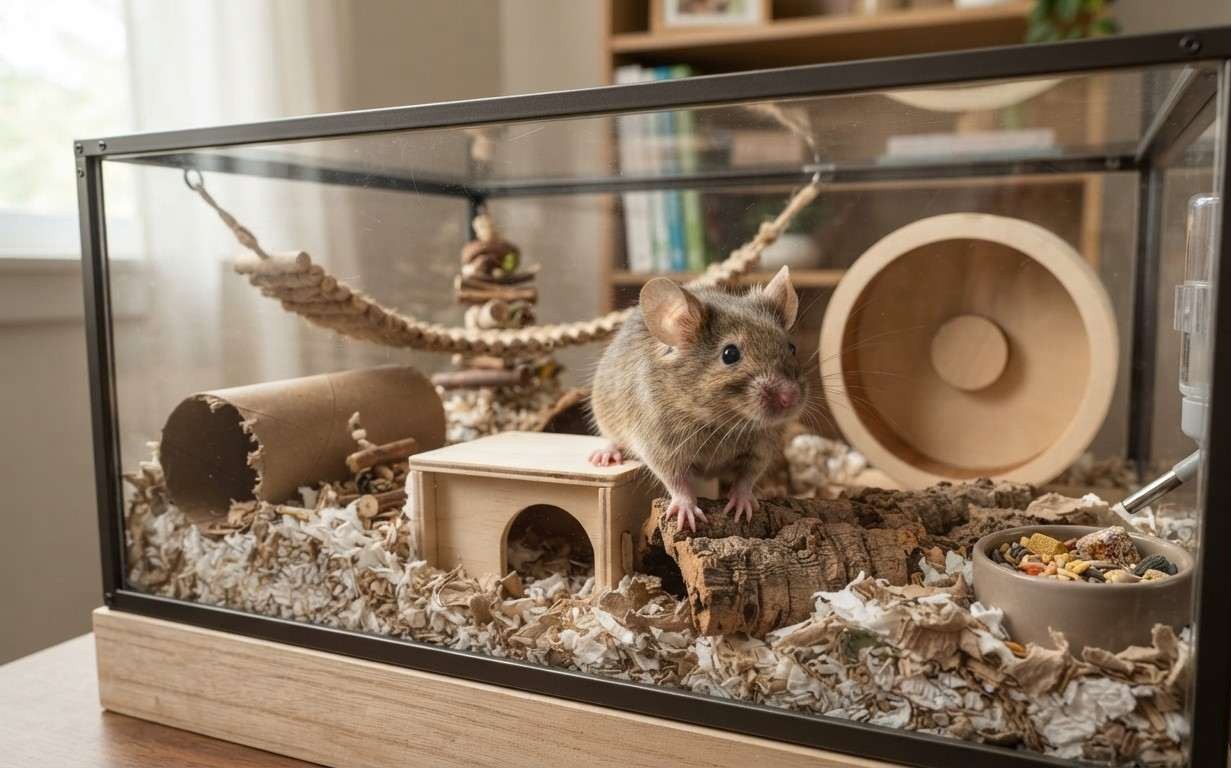
A pet mouse may be tiny, but there is much more to caring for one than simply providing a small cage, some food, and a water bottle.
Mice are intelligent, active, social, and surprisingly entertaining animals. They spend their days exploring, climbing, digging, nesting, grooming, and investigating anything new in their environment. Once they become comfortable with their surroundings, they can develop individual personalities and recognizable habits.
For the right owner, a pet mouse can be a wonderful companion.
But mice also have specific needs that prospective owners should understand before bringing one home.
Their small size does not mean they require little care.
They need an appropriate enclosure, suitable bedding, a nutritious diet, enrichment, careful handling, regular cleaning, and access to veterinary care when necessary.
If you're thinking about keeping mice as pets, this guide covers the essentials—from choosing your mouse and preparing its home to feeding, handling, enrichment, health, and everyday care.
What Is a Pet Mouse?
The domestic mouse kept as a companion is generally a domesticated form of the house mouse, scientifically known as Mus musculus.
Pet mice are available in a variety of colors, patterns, coat types, and appearances.
You may encounter mice with:
- White coats
- Black coats
- Brown coats
- Gray coats
- Spotted patterns
- Short fur
- Longer or specialized coat types
Despite their differences in appearance, they share many of the same basic needs.
Mice are small prey animals, which means they can be naturally cautious around unfamiliar people and environments.
That does not mean they cannot become comfortable with humans.
With patience and gentle handling, many mice learn to recognize their caregivers and become much more confident around them.
Are Mice Good Pets?
For the right household, yes.
Mice can be excellent pets because they are:
- Small
- Fascinating to observe
- Active
- Intelligent
- Relatively inexpensive compared with many larger pets
- Capable of learning routines
- Suitable for people who enjoy observing animal behavior
However, they are not ideal for everyone.
Mice are generally most active during the evening, night, and early morning. They can also be quick-moving and delicate, making them less suitable for very young children who may not yet be able to handle a small animal gently.
Their lifespan is also relatively short compared with many companion animals.
Anyone considering mice should be prepared for that reality.
How Long Do Pet Mice Live?
Pet mice generally have a relatively short lifespan, often around one to two years, although individual animals can live shorter or longer depending on genetics, care, and health.
This is one of the most important things to consider before adopting.
A mouse may become part of your daily routine surprisingly quickly.
You learn its habits.
You recognize its favorite sleeping place.
You notice how it reacts when you enter the room.
You may develop a strong bond with an animal that weighs only a few dozen grams.
Because their lives are short, responsible care throughout that time matters enormously.
Male or Female Mouse?
One of the first decisions you'll face is whether to keep male or female mice.
This is important because their social needs and housing compatibility can differ.
Female Mice
Female mice can often live successfully in compatible groups, particularly when they are introduced appropriately and have enough space and resources.
They are commonly kept with other females rather than alone.
Male Mice
Adult male mice can be territorial and may fight with other males, particularly if they are unfamiliar with each other.
For this reason, housing adult males together requires particular caution and knowledge of mouse social behavior.
Avoid Unplanned Breeding
Never casually house males and females together unless breeding is intentional and you understand the responsibilities involved.
Mice reproduce quickly, and an unexpected litter can rapidly turn into a much larger population.
If you're unsure about sexing mice, have an experienced person or veterinarian confirm it.
Choosing a Healthy Mouse
When selecting a pet mouse, look for an animal that appears alert, active, and well cared for.
A healthy mouse should generally have:
- Bright, clear eyes
- Clean fur
- Normal breathing
- A healthy body condition
- Clean ears and nose
- Normal movement
- No obvious wounds
- No persistent discharge
Be cautious if you notice:
- Labored breathing
- Persistent sneezing
- Crust around the eyes or nose
- Bald patches
- Severe lethargy
- Diarrhea
- Unusual swelling
- Difficulty walking
- A hunched posture
These signs can indicate illness and deserve veterinary attention.
If possible, obtain your mouse from a reputable rescue, responsible breeder, or knowledgeable source where the animals' health and housing conditions can be assessed.
Preparing Before Your Mouse Comes Home
One of the biggest mistakes new owners make is bringing the mouse home first and figuring everything out afterward.
Prepare the enclosure before the animal arrives.
You should already have:
- A secure enclosure
- Appropriate bedding
- Food
- Fresh water
- Hides
- Nesting material
- Safe enrichment
- A suitable exercise wheel
- Cleaning supplies
- A safe location for the enclosure
This allows your mouse to settle into a prepared environment rather than being exposed to unnecessary changes during its first few days.
Choosing the Right Enclosure
The enclosure is one of the most important purchases you will make.
A mouse needs more than enough floor space to physically fit.
It needs an environment that allows it to explore, exercise, hide, nest, and display natural behaviors.
A good enclosure should provide:
- Secure walls
- Good ventilation
- Appropriate floor space
- Safe access
- Protection from escapes
- Enough height for enrichment where appropriate
The exact enclosure design matters because mice are excellent escape artists.
If there is a tiny gap, a determined mouse may eventually investigate it.
Avoid Dangerous Wire Flooring
Wire flooring can cause problems for small animals because their feet can become injured or caught.
Whenever possible, provide a solid walking surface.
The enclosure should be designed around comfort and safe movement rather than simply maximizing ventilation or making cleaning easy.
Your mouse spends essentially its entire life inside this environment.
Think of the enclosure as its home—not merely its container.
Bedding Matters
Bedding serves several purposes.
It absorbs moisture.
Controls odors.
Provides a digging substrate.
Allows nesting.
And creates opportunities for natural behavior.
Good bedding should be absorbent, low-dust, and appropriate for small mammals.
Paper-based bedding is a commonly used option.
Some owners also use suitable aspen-based bedding.
Avoid strongly scented bedding and materials that can irritate the respiratory system.
The goal is not to make the cage smell artificially fresh.
The goal is to create a clean, healthy environment.
How Deep Should the Bedding Be?
Mice naturally enjoy digging and exploring beneath surfaces.
Providing a meaningful depth of bedding allows them to create tunnels and investigate their surroundings.
Instead of treating bedding as a thin layer designed only to absorb waste, think of it as part of the enrichment.
A deeper substrate can allow:
- Tunneling
- Burrowing
- Searching
- Nest construction
- Exploration
This can make the enclosure significantly more interesting for your mouse.
Creating Hiding Places
Mice are prey animals.
Being able to hide is therefore extremely important.
Provide several safe places where your mouse can retreat.
These might include:
- Wooden hides
- Cardboard boxes
- Tunnels
- Paper-based shelters
- Nesting areas
Having multiple hiding locations allows the mouse to choose where it feels most comfortable.
A mouse that has somewhere safe to retreat is often more confident about exploring the rest of its environment.
Nesting Material
Mice love building nests.
Providing safe nesting material allows them to express natural behavior and create a comfortable sleeping area.
Plain, unscented paper materials can work well.
Avoid materials that can wrap tightly around limbs or create other hazards.
A mouse may carry nesting material across its enclosure, rearrange it repeatedly, and build an elaborate little sleeping area.
Watching this behavior is one of the surprisingly entertaining parts of keeping mice.
Exercise and the Importance of a Wheel
Mice are active animals.
A suitable exercise wheel can provide an important outlet for running.
The wheel should have a solid running surface rather than widely spaced bars that could trap feet or tails.
It should also be appropriately sized so the mouse can run without being forced into an uncomfortable posture.
A safe wheel can provide substantial exercise, especially when combined with opportunities to explore and forage.
Enrichment: Keeping a Mouse Mentally Active
A mouse does not need entertainment in the same way humans do.
But it does need opportunities to perform natural behaviors.
Enrichment can include:
- Cardboard tunnels
- Paper tubes
- Climbing structures
- Hides
- Digging areas
- Foraging activities
- Scatter feeding
- Nest-building materials
- Safe chewable objects
The enclosure does not need to be filled with expensive toys.
A simple cardboard tube can become an exciting exploration tunnel.
A paper box can become a new hiding place.
Food hidden safely around the enclosure can turn feeding into a foraging activity.
Creativity matters more than cost.
Feeding Your Pet Mouse
A good diet is fundamental to mouse health.
A quality commercial mouse or rodent food should form the nutritional foundation of the diet.
These foods are formulated to provide appropriate levels of nutrients and are generally safer as a staple than trying to create a diet from random household foods.
Fresh foods can be offered in moderation where appropriate.
Potential options may include small portions of suitable vegetables and other safe foods.
However, treats should not replace a nutritionally complete staple diet.
Foods to Avoid
Some human foods can be unsafe or inappropriate for mice.
Avoid feeding foods that are:
- Highly salty
- Heavily seasoned
- Sugary
- Moldy
- Spoiled
- Very fatty
- Toxic to rodents
You should also research any unfamiliar food before offering it.
A mouse's tiny body means even a small quantity can represent a significant amount relative to its size.
When in doubt, stick to a balanced commercial diet and veterinarian-approved treats.
Fresh Water
Fresh, clean drinking water should always be available.
A properly functioning water bottle is commonly used because it helps prevent bedding and food from contaminating the water.
Check it regularly.
Do not assume that because the bottle appears full, it is working.
A blocked nozzle can prevent access to water.
Make checking the water supply part of your daily routine.
Treats Should Be Small
Mice are naturally curious about food.
They may eagerly accept treats even when they do not need them.
That does not mean treats should make up a large portion of the diet.
Small pieces are usually enough.
Treats can also be used as part of enrichment or gentle trust-building.
For example, offering a tiny treat from your hand can help your mouse associate your presence with positive experiences.
Understanding Mouse Behavior
One of the most rewarding parts of owning a mouse is learning its behavior.
Mice communicate in subtle ways.
They use:
- Body language
- Scent
- Posture
- Vocalizations
- Movement
- Grooming
- Nesting behavior
Some of their communication occurs at frequencies humans cannot easily hear.
That means your mouse may be communicating more than you realize.
Over time, you'll begin to recognize its routines.
You may learn when it usually wakes up.
Where it likes to sleep.
Which tunnel it prefers.
Where it hides food.
And what it does when something unfamiliar enters the enclosure.
Are Pet Mice Nocturnal?
Mice are often described as nocturnal, but their activity pattern can be more flexible than that.
They tend to be particularly active during the evening and nighttime, with additional periods of activity throughout the day.
This means a mouse may not be awake and ready to interact whenever you are.
If you want a pet that is consistently active during daylight hours, a mouse may not be the best match.
Instead, enjoy their natural schedule.
Evening can be an excellent time to observe them exploring their enclosure.
How to Handle a Pet Mouse
Mice are tiny and delicate.
Handling should therefore be gentle and controlled.
When approaching a mouse, avoid suddenly grabbing it from above.
A hand coming down quickly can resemble a predator attack.
Instead, allow the mouse to become familiar with your presence.
Place your hand near the mouse.
Let it investigate.
Offer a small treat if appropriate.
As confidence develops, you can gradually introduce gentle handling.
Never Grab a Mouse by the Tail
This is particularly important.
Do not pick up a mouse by the end or tip of its tail.
The tail is delicate and can be injured.
Instead, use appropriate gentle support with your hands.
For particularly nervous mice, allowing them to step onto your hand voluntarily can be less stressful than attempting to catch them.
Building Trust Takes Time
Some mice become comfortable with people quickly.
Others require considerably more patience.
Don't measure success by how quickly you can hold your mouse.
A mouse calmly approaching your hand is already progress.
Trust develops through repeated positive interactions.
Keep sessions short at first.
Avoid chasing the animal around its enclosure.
And stop if it becomes clearly stressed.
The goal is to make interaction predictable and safe.
Cleaning the Enclosure
A mouse's home needs regular maintenance.
However, cleaning too aggressively can also be stressful because mice rely heavily on scent.
A sensible routine involves:
- Removing visibly soiled bedding
- Cleaning food and water equipment
- Removing spoiled food
- Maintaining dry areas
- Replacing bedding as needed
- Periodically cleaning the enclosure thoroughly
Avoid completely eliminating every familiar scent during every cleaning session.
Keeping some clean nesting material or familiar bedding can help preserve a sense of familiarity.
Odor Control
People sometimes assume mice are extremely smelly pets.
The reality depends heavily on enclosure design, cleanliness, bedding, and the number and sex of animals being kept.
Good ventilation and appropriate cleaning are important.
But there is a balance.
Over-cleaning can cause problems because the mouse may respond by marking its environment more heavily.
Instead of trying to make the enclosure completely odorless, aim for a clean, dry, well-maintained habitat.
Temperature and Location
The enclosure should be placed somewhere comfortable and stable.
Avoid:
- Direct sunlight
- Extreme heat
- Cold drafts
- Damp environments
- Excessive noise
- Constant disturbance
Mice are small animals and can be sensitive to environmental extremes.
A quiet area where they can sleep undisturbed during their resting periods is ideal.
At the same time, they should not be isolated from normal household activity.
Common Health Problems
Mice can experience a variety of health issues.
Some common concerns include:
- Respiratory disease
- Skin problems
- Parasites
- Dental problems
- Tumors
- Injuries
- Obesity
- Digestive problems
Because mice are prey animals, they may hide signs of illness until they are quite unwell.
That makes observation extremely important.
A mouse that suddenly becomes quiet, stops eating, loses weight, struggles to breathe, or changes its normal behavior deserves attention.
Signs Your Mouse May Be Sick
Pay attention to changes in normal behavior.
Potential warning signs include:
- Difficulty breathing
- Persistent sneezing
- Loss of appetite
- Significant weight loss
- Unusual lethargy
- Discharge from the eyes or nose
- Changes in stool
- Swelling
- Bald patches
- Unusual scratching
- Difficulty moving
- A hunched posture
If you notice concerning symptoms, contact a veterinarian with experience treating small mammals.
Don't wait simply because the animal is small.
Small animals can deteriorate quickly.
Finding a Veterinarian Before You Need One
One of the smartest things a new mouse owner can do is identify a suitable veterinarian before an emergency occurs.
Not every veterinary clinic has the same experience with mice and other small mammals.
Search for a veterinarian who is comfortable treating rodents or small exotic companion animals.
Save the clinic's contact information.
Know its opening hours.
And understand where you would go if your mouse became sick outside normal business hours.
Being prepared can make an enormous difference.
Mice Are Not "Low-Maintenance" Pets
Because mice are small, people sometimes assume they require very little care.
This is misleading.
A mouse may not need the same amount of space as a dog, but it still needs daily attention.
You need to:
- Check its water
- Observe its behavior
- Provide appropriate food
- Maintain its environment
- Monitor its health
- Provide enrichment
- Handle it responsibly
The work may be manageable, but it is still a commitment.
Small does not mean disposable.
The Social Needs of Mice
Mice are social animals, but social housing requires careful consideration.
Female mice are often kept in compatible groups.
Male mice can be more complicated because adult males may display territorial aggression.
Housing decisions should therefore be based on sex, compatibility, individual behavior, enclosure size, and expert guidance.
Never assume that two unfamiliar mice will automatically become friends.
Introducing animals incorrectly can result in serious fighting and injury.
Should You Keep One Mouse or Several?
This depends on the sex and circumstances of the animals.
For female mice, compatible social groups can often provide valuable companionship.
For male mice, housing arrangements require more caution.
If you are new to mouse care, ask an experienced rescue, breeder, or veterinarian for guidance based on the specific animals you are considering.
The goal is not simply to maximize the number of mice.
The goal is to create a safe and socially appropriate environment.
Can Mice Live With Other Pets?
Mice should generally be protected from other household animals.
Even a friendly cat or dog can pose a serious threat to a mouse.
Predatory instincts can be unpredictable.
A curious animal may also knock over or open an enclosure.
Keep the mouse's habitat secure and prevent unsupervised interaction with other pets.
For the mouse, safety should always come first.
Children and Pet Mice
Mice can be fascinating pets for families, but they are not necessarily ideal as a child's first animal.
They are small.
They move quickly.
They can be injured by rough handling.
And they can become stressed if constantly chased or grabbed.
Adults should supervise interactions and teach children how to behave around the animals.
Children can participate in feeding, observation, and gentle enrichment activities without necessarily being responsible for all aspects of care.
The Cost of Keeping a Mouse
One advantage of mice is that the initial cost can be lower than many larger pets.
However, responsible ownership still requires investment.
You may need to purchase:
- An appropriate enclosure
- Bedding
- Food
- Water equipment
- A wheel
- Hides
- Enrichment
- Cleaning supplies
- Veterinary care
The biggest mistake is trying to save money by buying an unsuitable enclosure or poor-quality supplies.
Spend money where it directly affects welfare.
A secure, enriching habitat is more important than decorative accessories.
Common Mistakes New Mouse Owners Make
Several mistakes appear repeatedly among inexperienced owners.
Choosing a Tiny Cage
A mouse needs opportunities to explore and express natural behaviors.
Using Unsafe Bedding
Dusty or strongly scented bedding can create problems.
Keeping Incompatible Mice Together
Social animals still have territorial behavior.
Overfeeding Treats
Small animals can gain excess weight quickly.
Handling Too Aggressively
Trust takes time.
Cleaning Too Aggressively
Removing every familiar scent can be stressful.
Ignoring Small Health Changes
Mice can become seriously ill quickly.
Buying a Wheel With Dangerous Gaps
A poorly designed wheel can cause injuries.
Avoiding these mistakes can dramatically improve your mouse's quality of life.
Making the Enclosure Interesting
You don't need to spend a fortune creating an exciting habitat.
Try rotating safe enrichment.
One week, provide several cardboard tubes.
Later, rearrange the tunnels.
Add new nesting material.
Create a simple foraging activity.
Introduce a new safe hide.
The environment does not have to look like a luxury playground.
It simply needs to give the mouse reasons to explore.
Foraging Is Excellent Enrichment
Instead of putting all food into one bowl, some suitable food can be distributed safely around the enclosure.
This encourages the mouse to search.
Searching for food is a natural behavior and can provide mental stimulation.
You can hide small amounts of food under bedding or inside safe enrichment objects.
The important thing is to ensure that food does not remain hidden long enough to spoil.
Getting to Know Your Mouse
Every mouse has its own personality.
Some are bold.
Some are cautious.
Some are extremely curious.
Some seem to investigate everything.
Others prefer to observe from a safe hiding place before venturing out.
As you spend time with your mouse, these differences become surprisingly obvious.
You may eventually recognize individual behaviors without even thinking about them.
That is one of the pleasures of keeping a small animal.
The relationship grows quietly.
Is a Mouse the Right Pet for You?
Before bringing one home, ask yourself a few questions.
Can you provide a safe and appropriately sized enclosure?
Can you afford quality food and bedding?
Can you commit to daily care?
Can you handle a short lifespan?
Can you provide appropriate social arrangements?
Can you access veterinary care?
Are you comfortable with an animal that may be most active at night?
If the answer to these questions is yes, a mouse could be a rewarding companion.
Final Thoughts
Pet mice may be tiny, but they are not simple pets.
Behind those small eyes is an active animal with natural instincts, social needs, preferences, habits, and a surprising capacity for learning.
The best mouse owners do not simply provide food and shelter.
They create an environment where the animal can explore, hide, dig, forage, nest, exercise, and feel safe.
That means choosing an appropriate enclosure, using safe bedding, providing enrichment, offering a balanced diet, maintaining clean water, monitoring health, and handling the mouse with patience.
Most importantly, it means understanding that responsible pet ownership is about more than how much space an animal occupies.
It is about the quality of life you provide.
A mouse may fit comfortably in the palm of your hand, but that tiny animal still deserves a thoughtfully designed home, proper care, and respect for its natural behavior.
If you're prepared to provide those things, bringing a mouse home can be the beginning of a surprisingly rewarding relationship.